
Journal · Money · 25 September 2024
How to budget a renovation without lying to yourself
Most renovation budgets fail in the same three places: the things nobody costed, the contingency that was spent on choices, and the decision made in week two that changed everything downstream.

Tomas Brill
5 minute read · published 25 September 2024
The first number anybody puts on a renovation is arrived at by taking the amount they have and describing it as the budget. That is not a budget, it is a limit. A budget is a list of what things cost, and it is built the other way round.
What follows is the method we use with clients, and the parts of it people find uncomfortable.
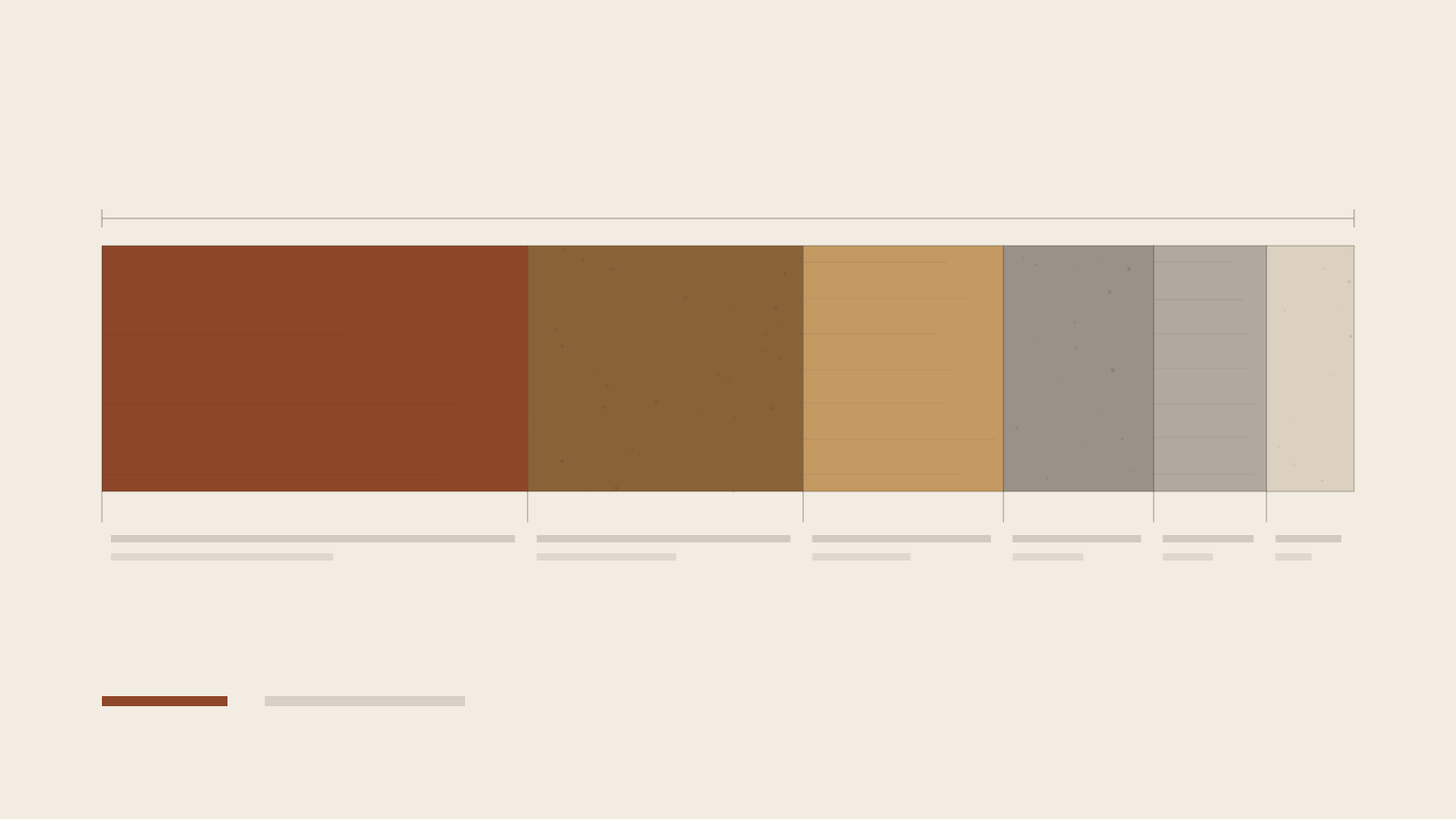
Build it from the bottom, in five parts
Split the money into five separate pots and never let them borrow from each other silently.
Construction is the work itself: trades, materials, plant, waste, scaffolding. On a normal domestic project this is between 60 and 70 per cent of the total.
Fittings and finishes is everything you choose: kitchen, sanitaryware, tiles, flooring, lighting, ironmongery, paint. This is where the range in any quotation lives, because a tap can cost £45 or £450 and both fit the same hole. Typically 15 to 25 per cent.
Professional and statutory is fees: design, structural engineer, building control, party wall surveyor, planning or listed building applications, and any specialist report. Typically 8 to 15 per cent, and higher on anything old or structural.
Contingency is money set aside for what you find, not for what you change your mind about. On new build work, 10 per cent. On renovation of a house built before 1940, 15 to 20 per cent, and we would argue for 20.
Living costs are what it costs you to get through it: storage, a microwave, meals out, a rental if you have to move. People leave this out entirely and then find it has come out of the contingency.
The contingency is not a discount
The most common failure we see is a contingency spent in month one on an upgrade. The client sees the kitchen going in, decides on a better worktop, and the £4,000 that existed for the moment the drains turn out to be shared with next door has gone.
Keep them separate in your own head and, if you can, in a separate account. A contingency is for the unforeseen and the unforeseen has not happened yet. If you reach the end with it unspent, that is not a windfall you were owed, it is a project that went well.
On the cafe refit on a market square the contingency was almost entirely consumed by a consumer unit that nobody could have known needed replacing until the first fix was open. That is exactly what it is for and the project finished on time because it existed.
Where the money actually goes on an old house
People are consistently surprised by three costs on a period property.
The first is making good. Every time you open a wall, chase a cable or lift a floor in an old house, you create a repair. On a whole house renovation, plastering and decoration together will frequently come to more than the kitchen.
The second is access. Scaffolding, working at height, and the simple fact that a terrace with no side access means everything comes through the front door by hand. It can add several thousand pounds and it appears nowhere in anybody's mental model.
The third is time. Lime plaster needs to cure. Screed needs to dry before flooring. Paint needs the room to be warm. On the living room in a listed farmhouse, roughly half the programme was waiting, and waiting has a cost if you are paying for somewhere else to live.
Get a range, and then ask what moves it
When we give a figure we give a range, and we say what sits at each end. A range of £24,000 to £29,000 is only useful if you know that the top of it is the bespoke worktop and the underfloor heating and the bottom of it is a laminate top and keeping the radiators.
Ask any designer or builder giving you a number the same question. What is in the top of that range that is not in the bottom. If they cannot answer, the number is not a range, it is a hedge.
Ranges are also honest about their own accuracy. A small new building is the easiest thing in the world to price, which is why the range on the garden room for a piano teacher was only £5,000 wide and landed in the middle of it. Renovating a room in a house built in 1890 is the opposite, and a range that narrow on that kind of job would be a guess dressed up as a figure.
Decide early, because late decisions cost more than expensive ones
The single most expensive habit in renovation is not choosing costly things. It is choosing late.
A tile chosen at design stage costs the price of the tile. The same tile chosen after the walls are boarded may need a different adhesive, a different substrate, and a trade brought back. A socket moved on a drawing costs nothing. Moved after first fix it costs £80 and half a day. Moved after plastering it costs £250 and a decorator.
We ask clients to make every specification decision before work starts, including the paint colours, and we know that sounds premature. It is the cheapest insurance in the entire process. The other half of that discipline is the living costs pot, which is the one people leave out entirely and which is set out in living in the house while the work happens.
A worked shape
For a £40,000 total on a Victorian house, we would expect roughly: £25,000 construction, £7,000 fittings and finishes, £4,000 professional and statutory, £6,000 contingency at 15 per cent of construction plus fittings, and living costs on top depending on whether you stay.
If that arithmetic means the kitchen you wanted does not fit, that is the budget working. It is much better to find that out on a spreadsheet in March than on site in August, when the alternative is a phone call about what you are going to leave out.

Where to go next
Three routes on from this entry.